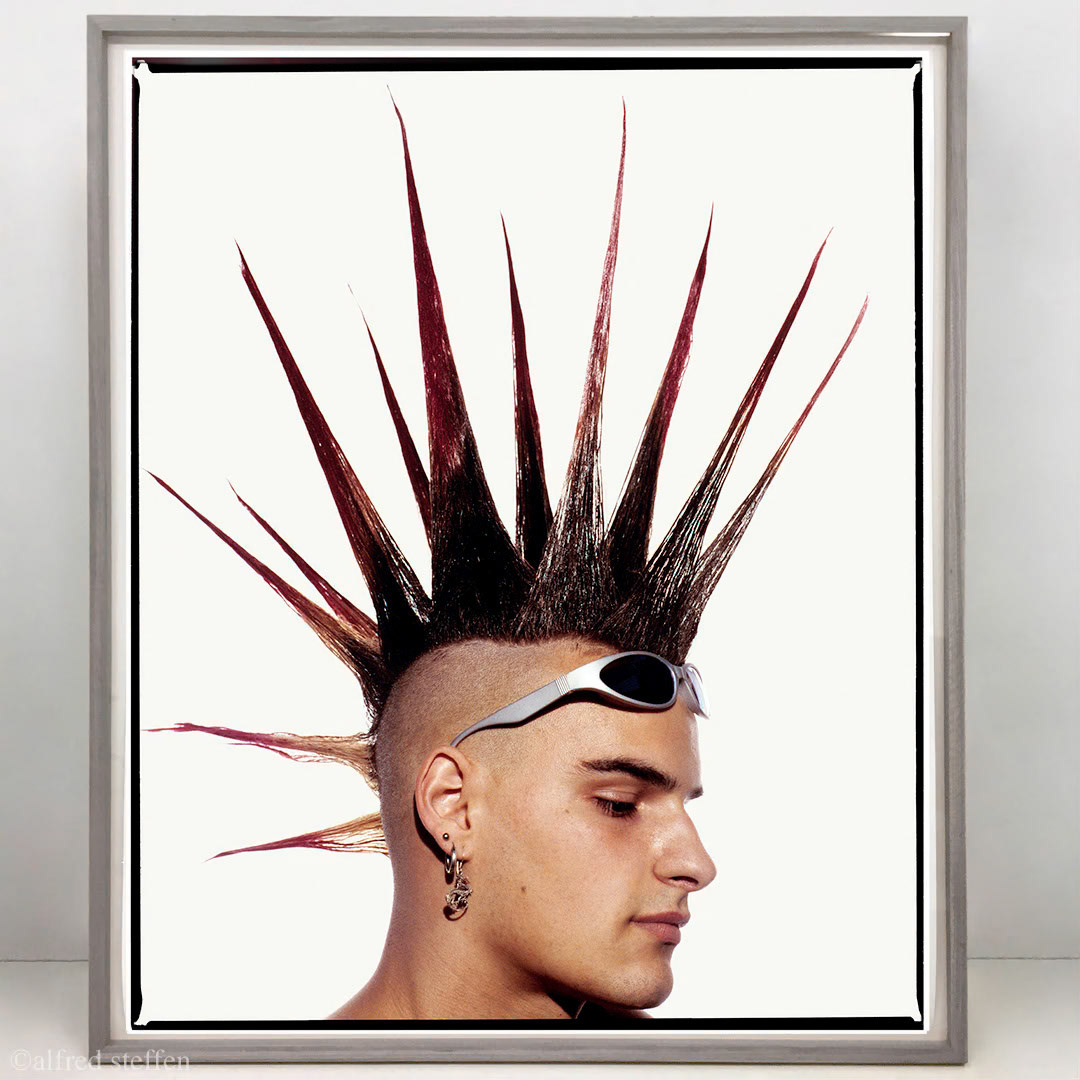
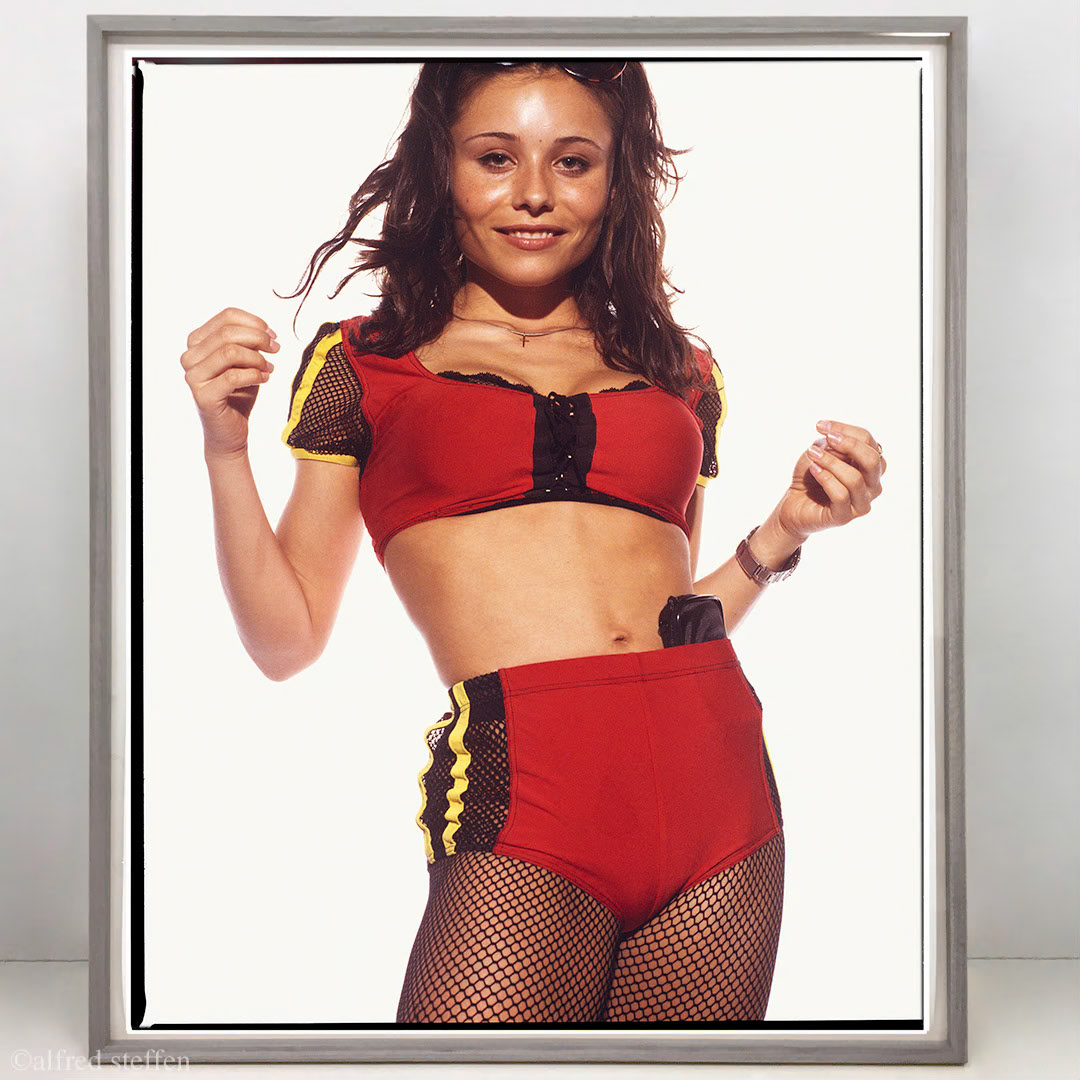
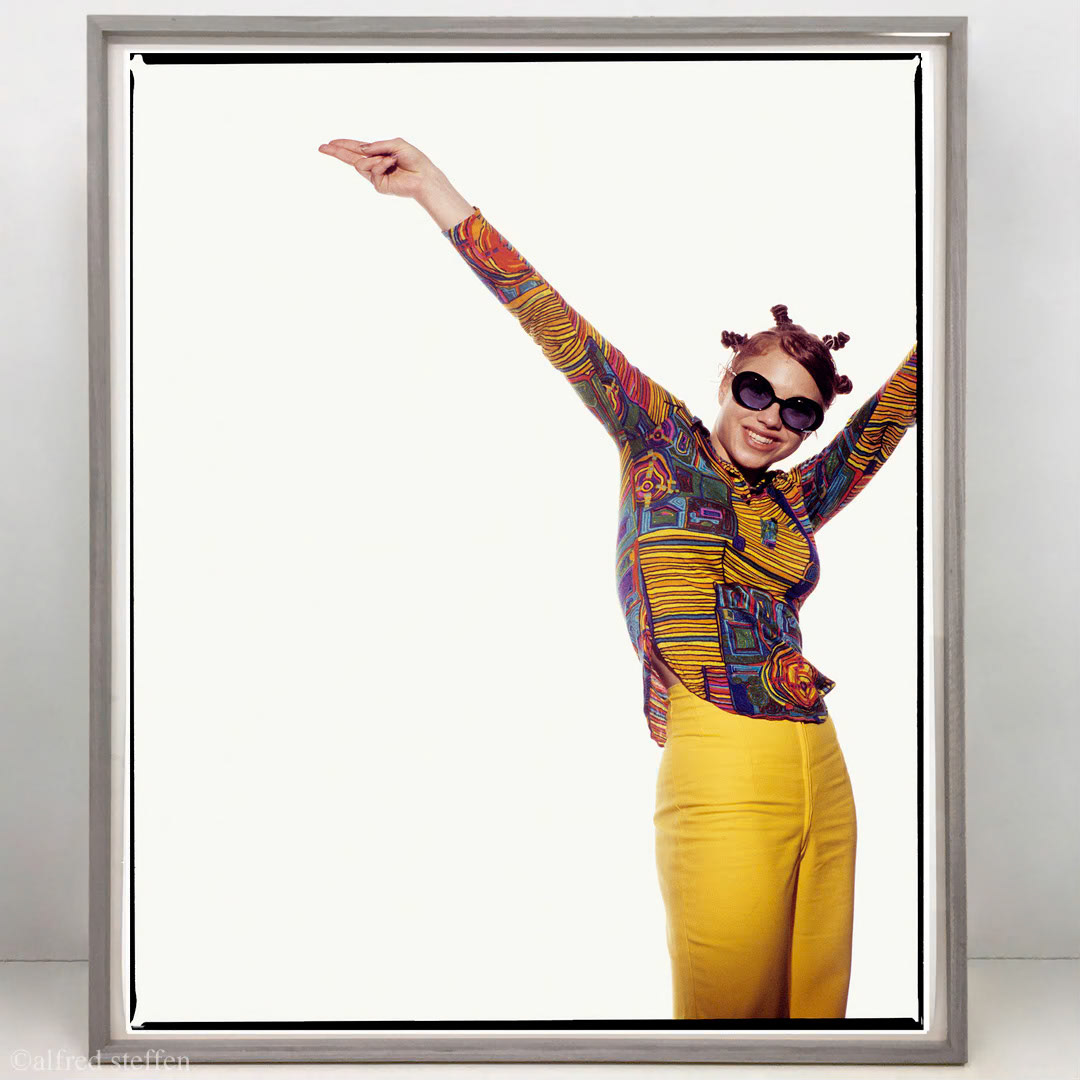
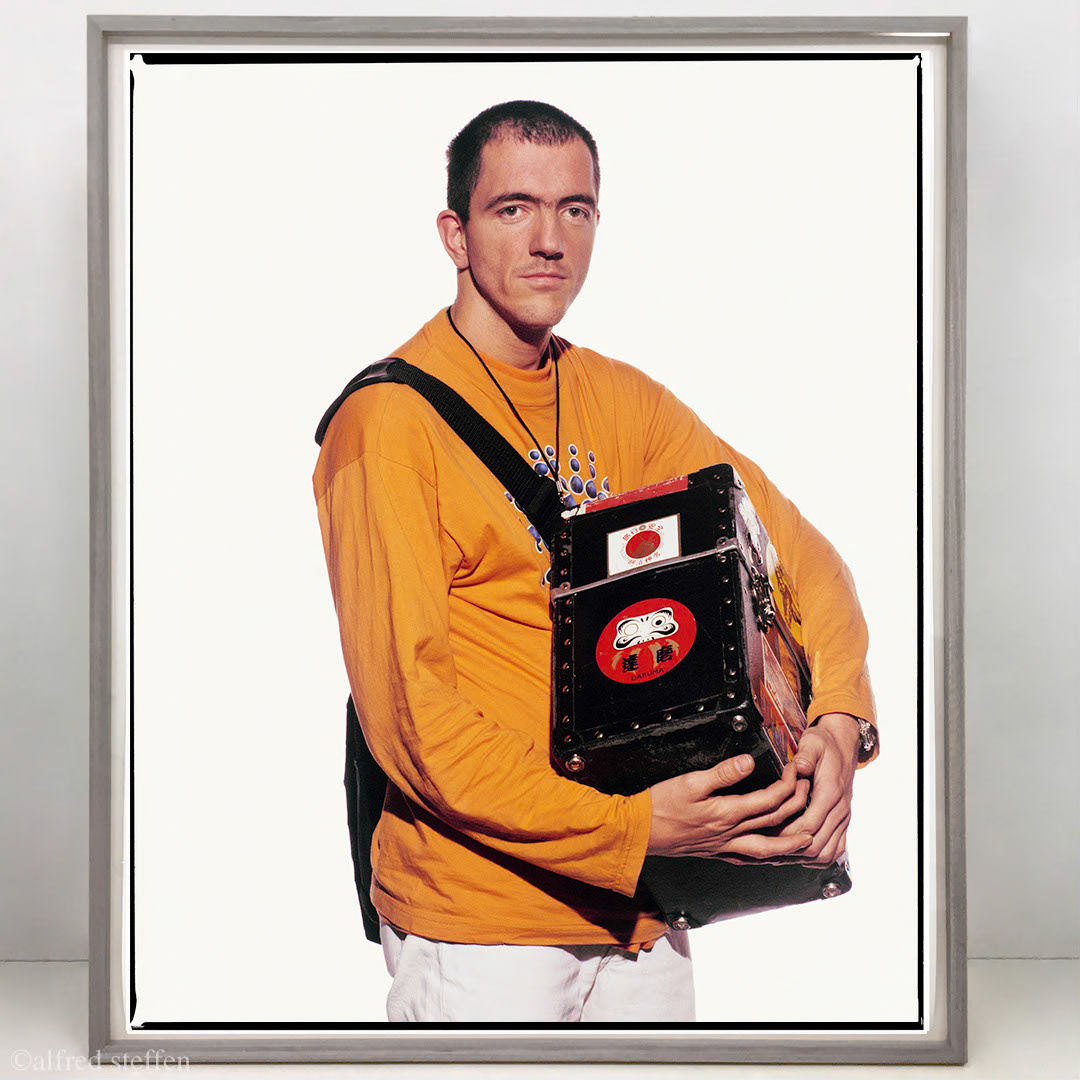
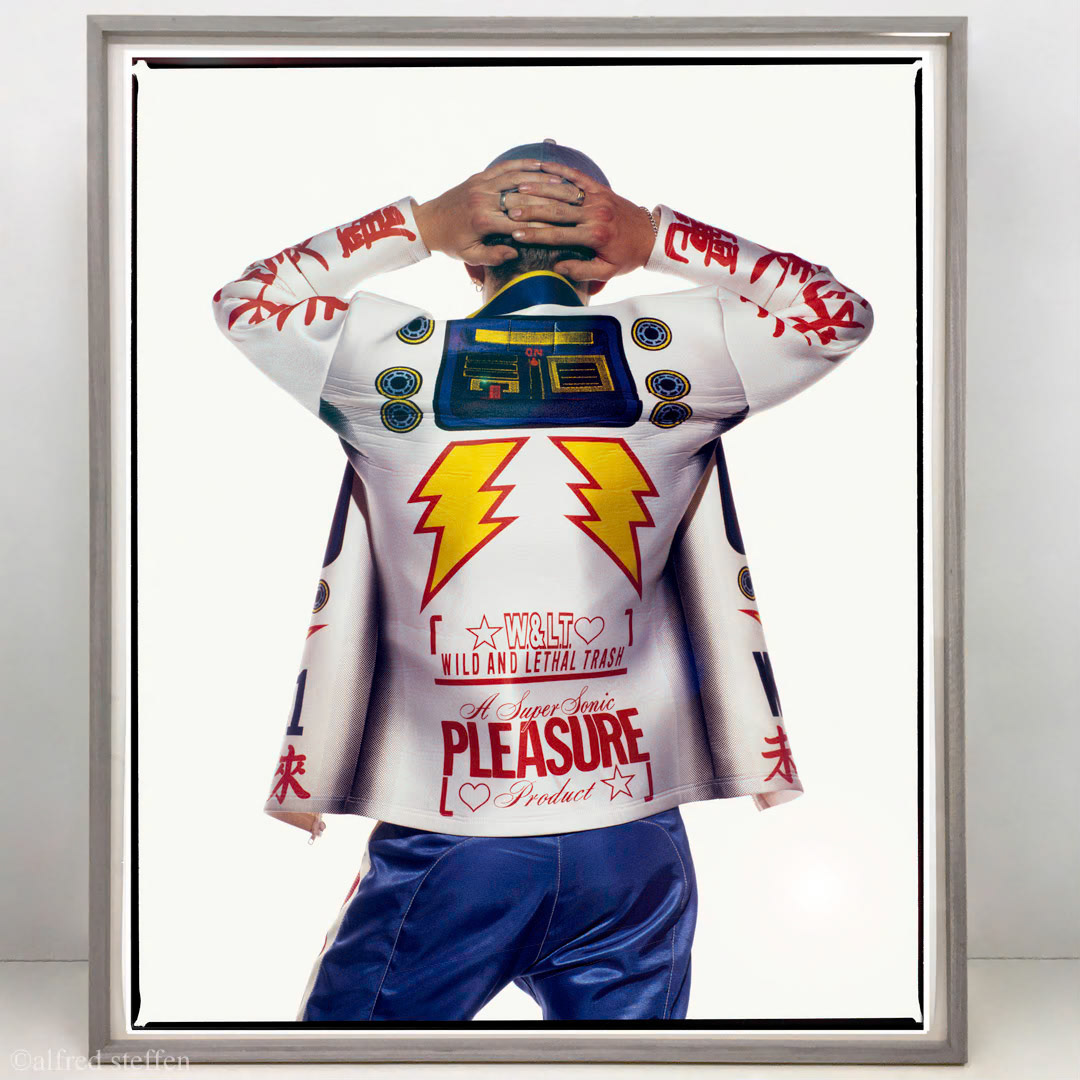
In the summer of 1996, at the height of Berlin’s Love Parade, one of the defining photographic documents of the 1990s was created:
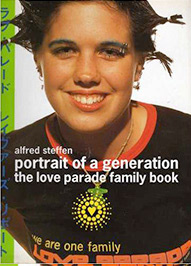
Portrait of a Generation – The Love Parade Family by Alfred Steffen.
Portrait of a Generation – The Love Parade Family by Alfred Steffen.
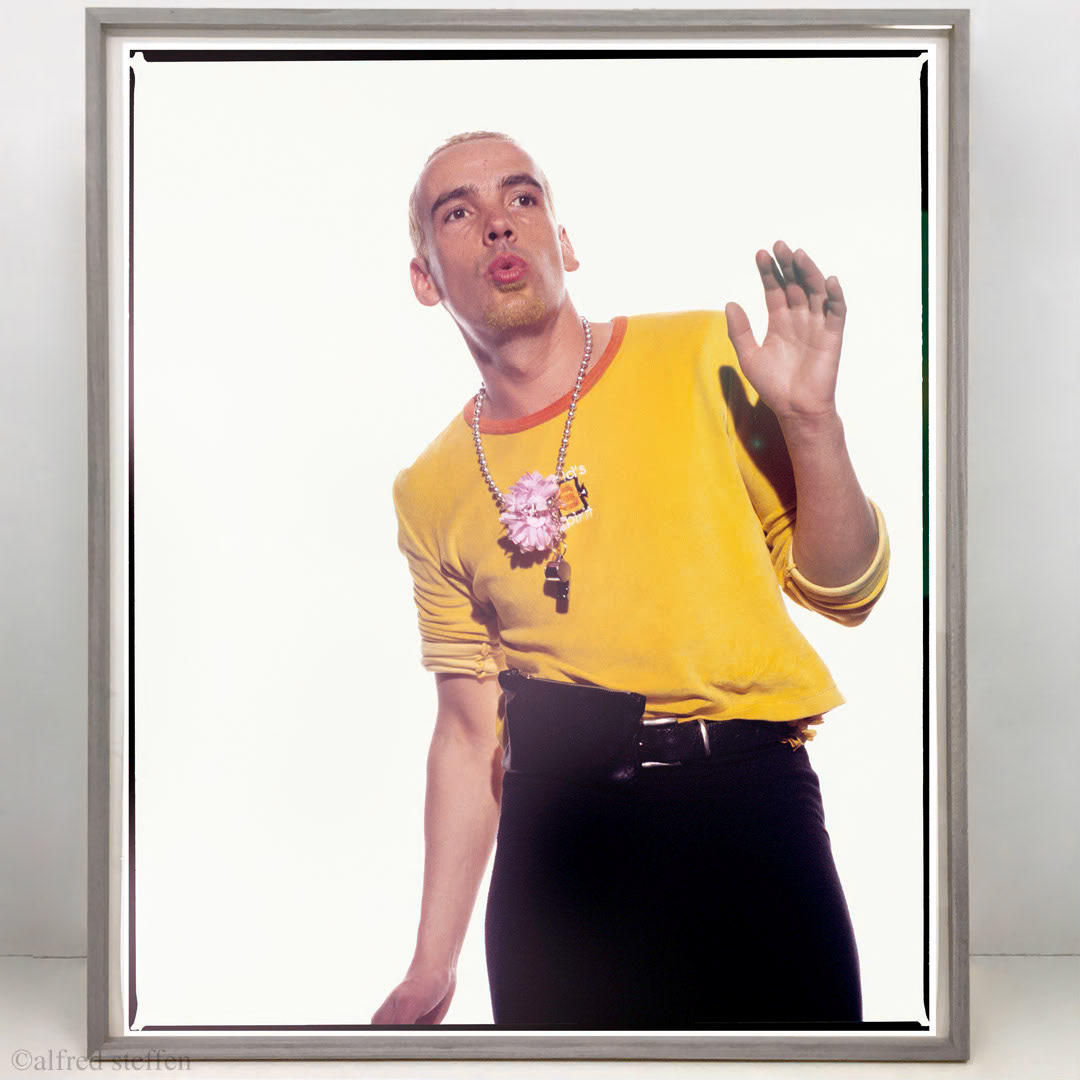
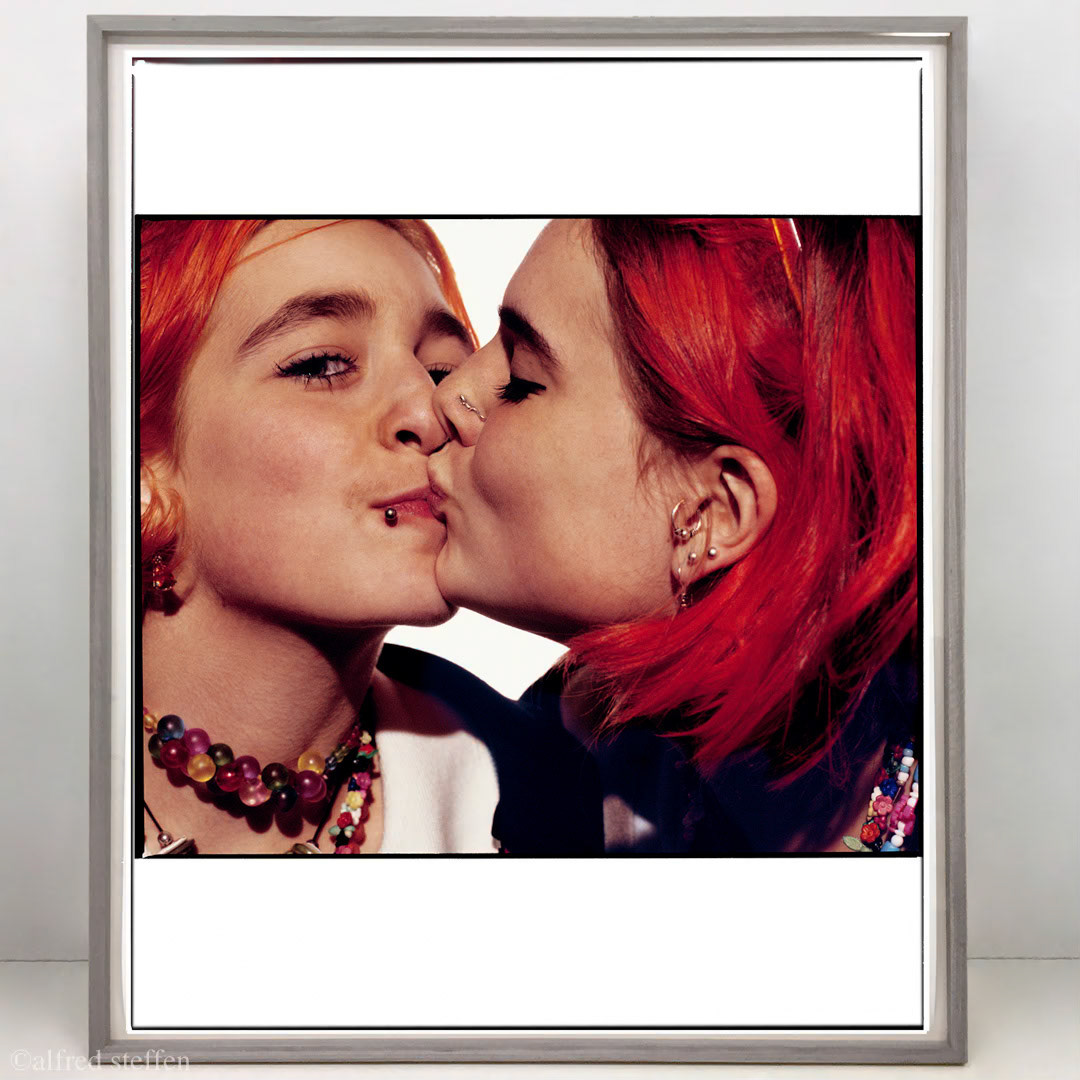
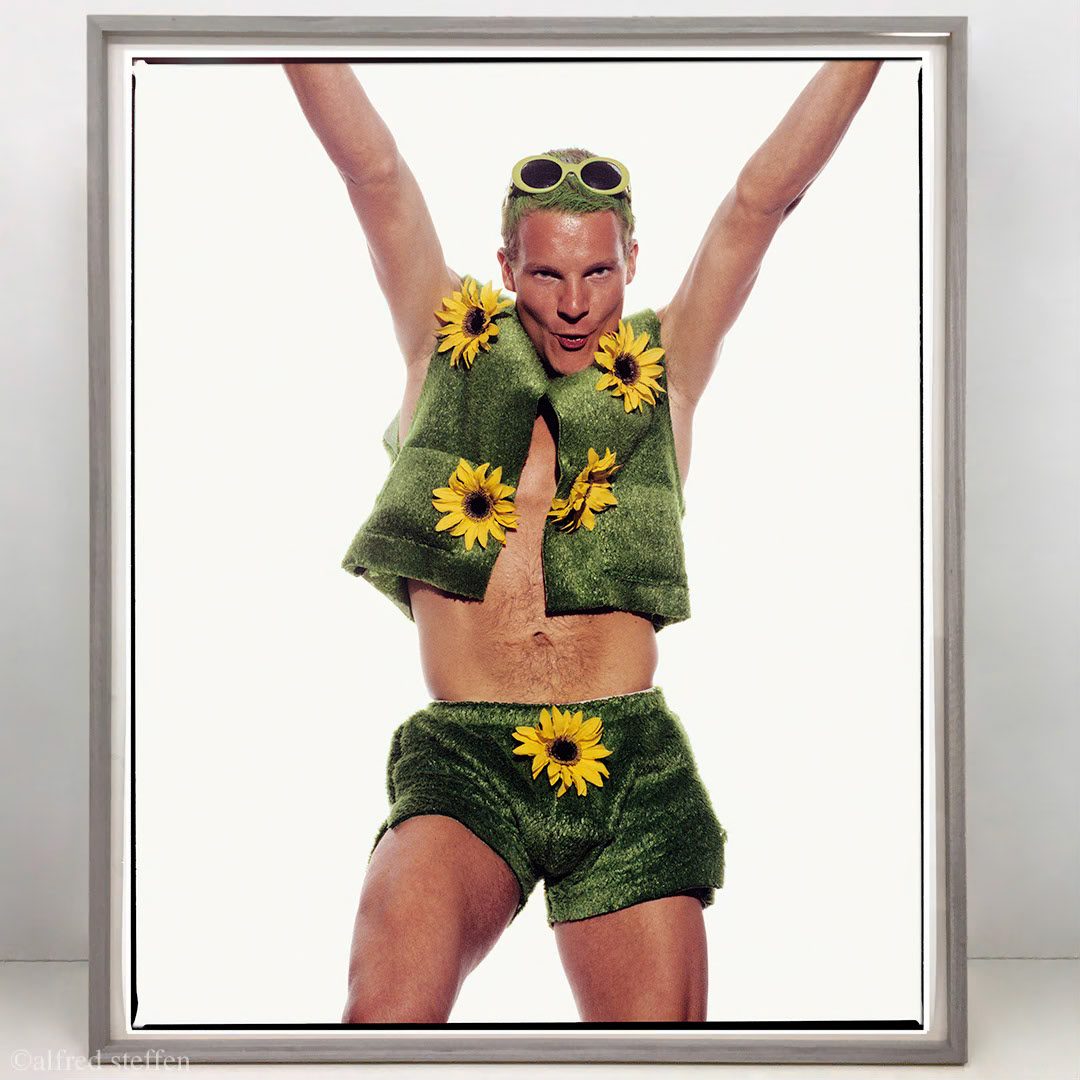
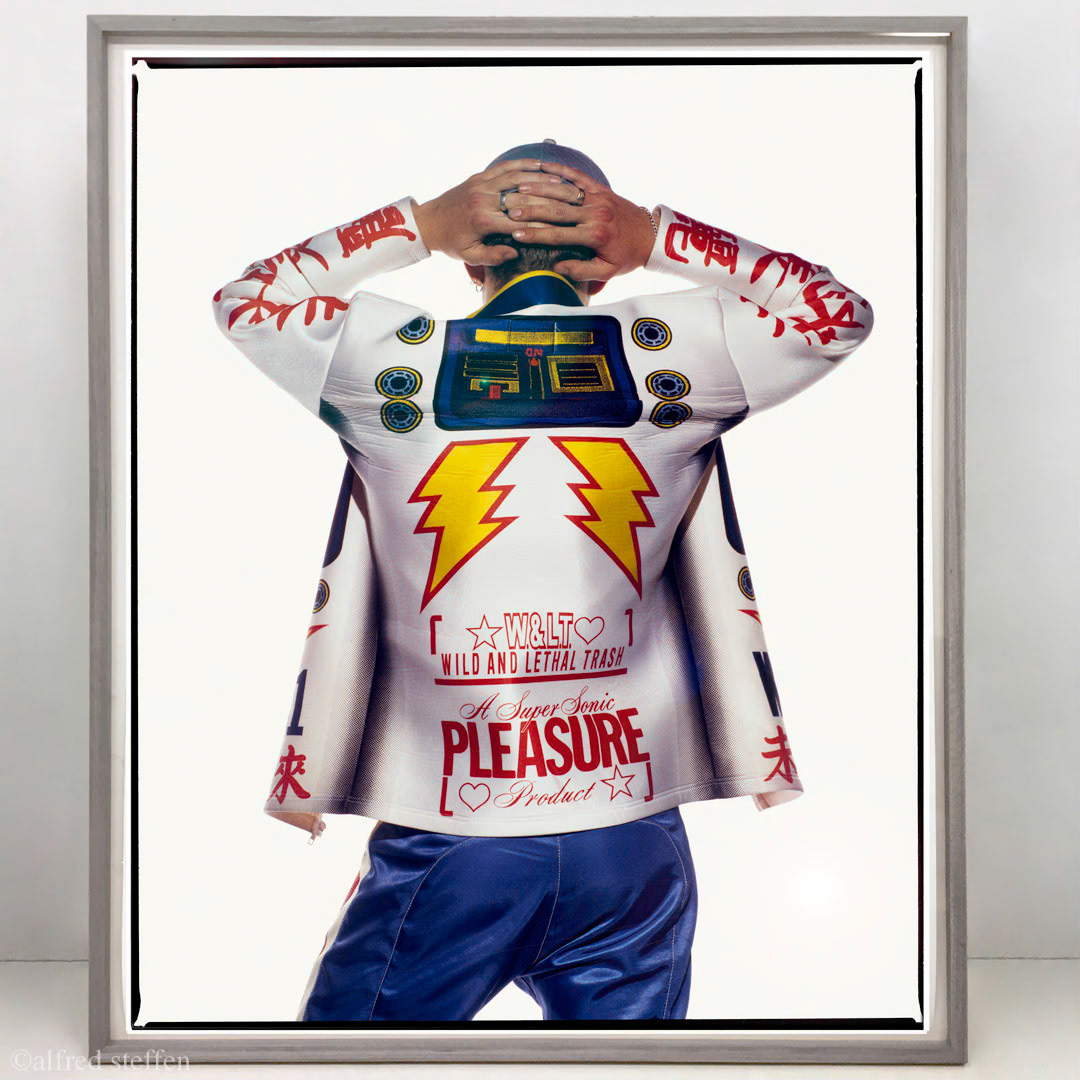
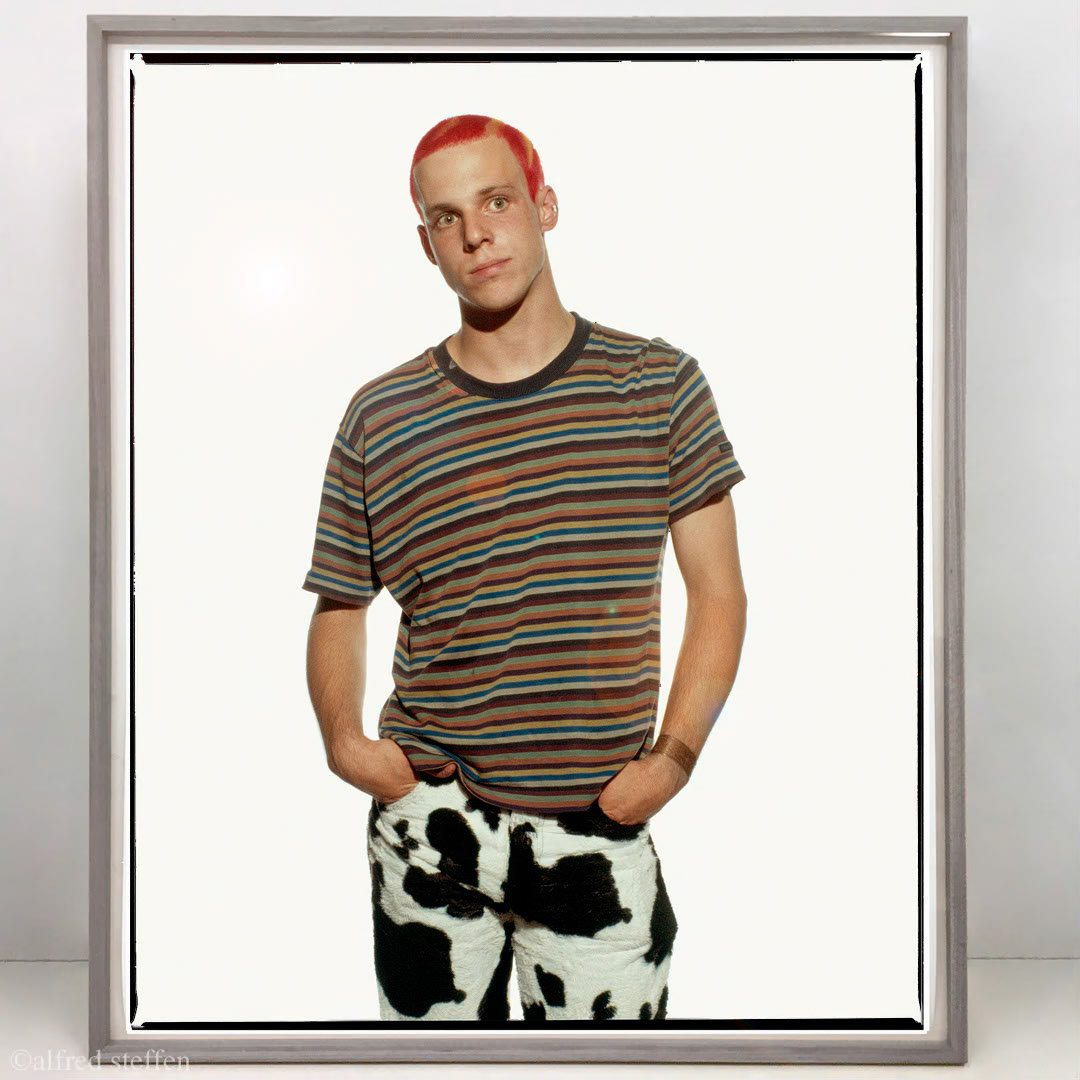
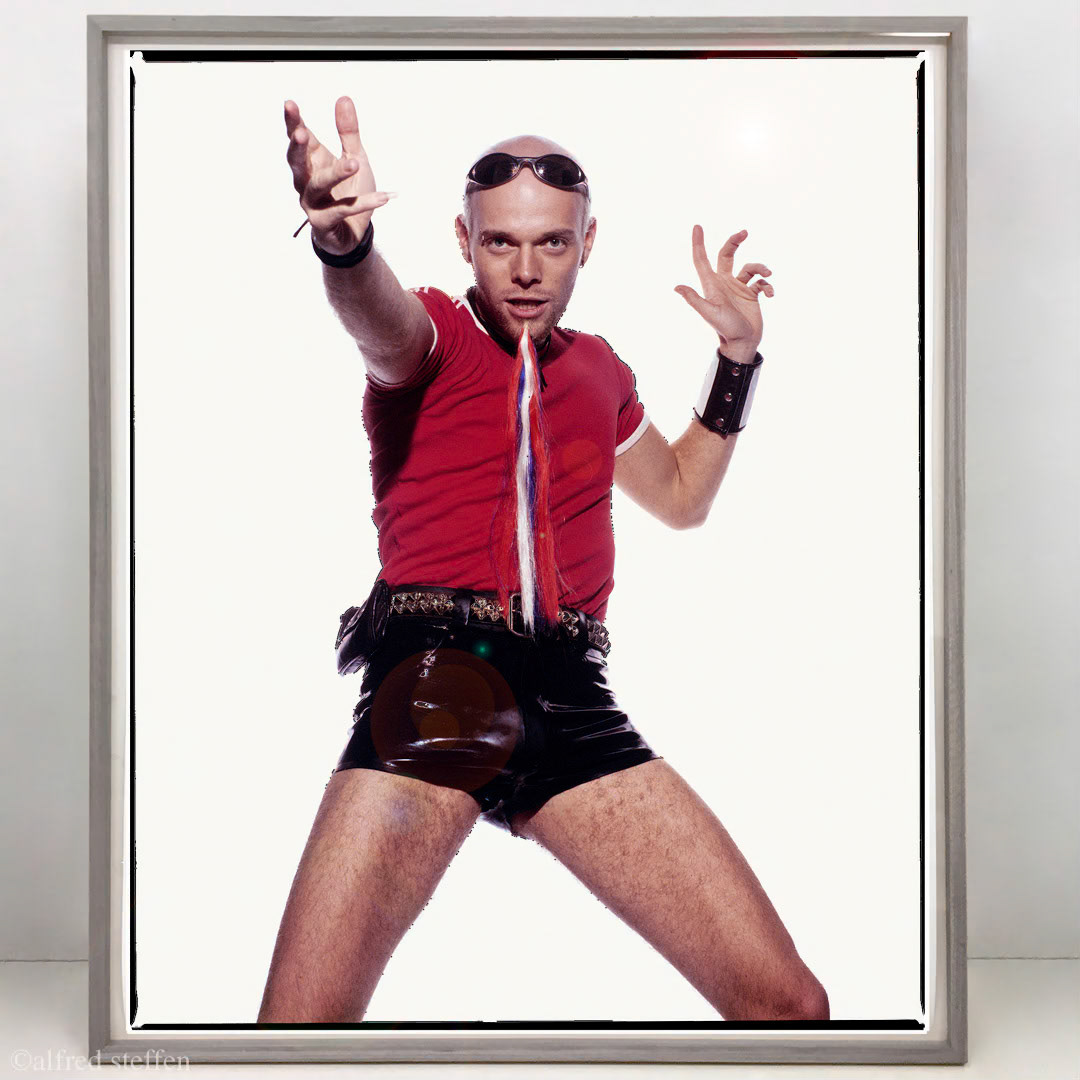
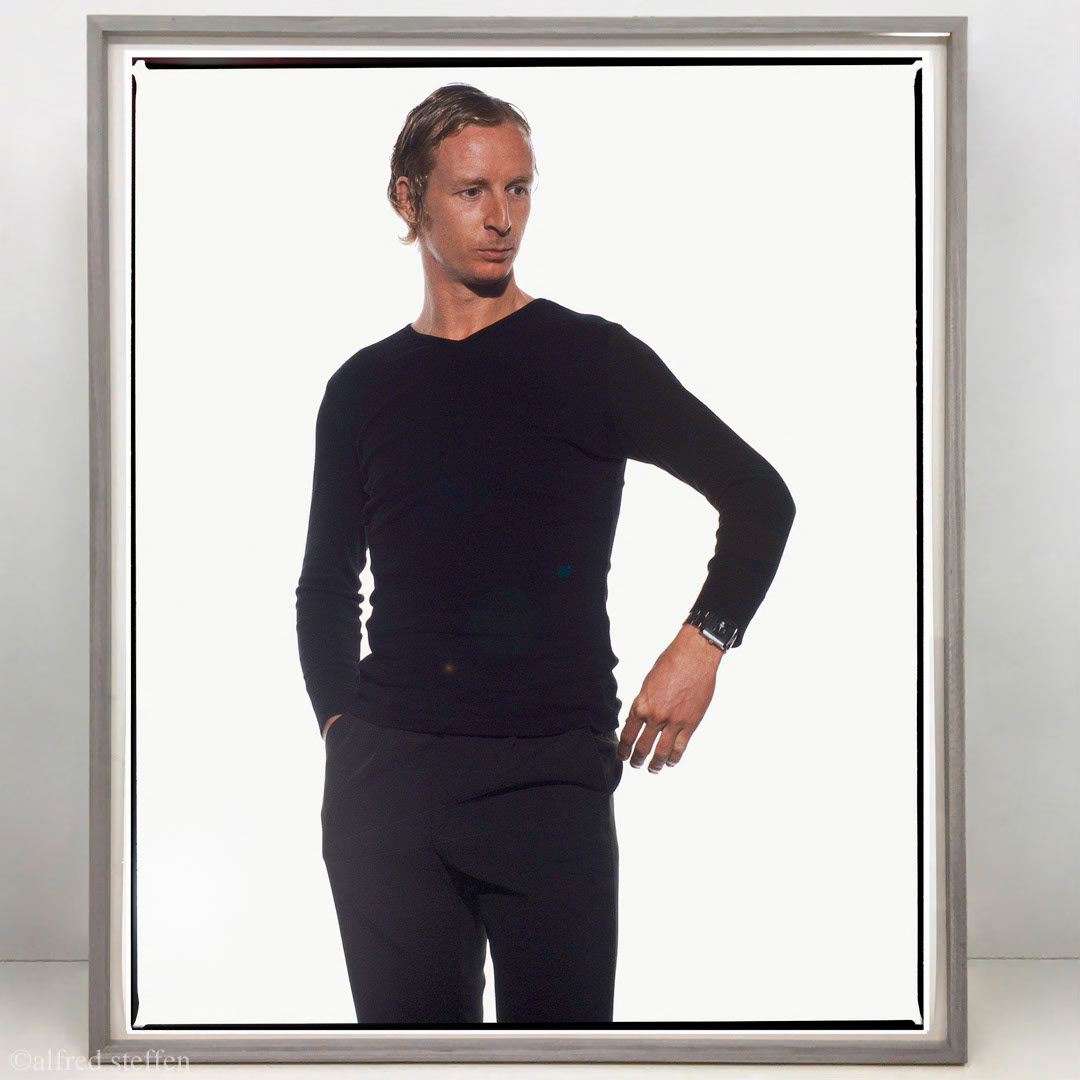
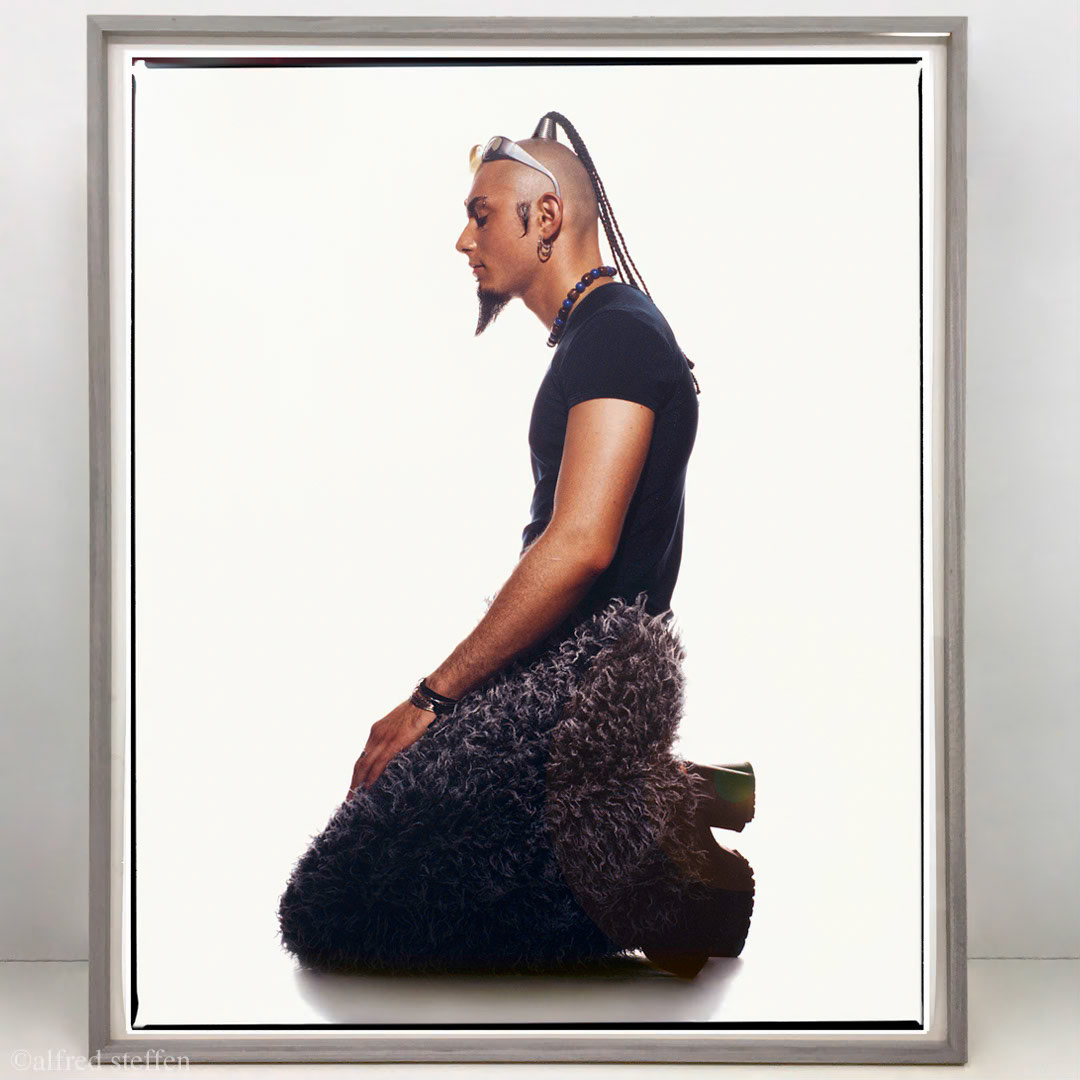
While the media largely focused on the monumental crowds surrounding Berlin’s Victory Column and Tiergarten, Steffen turned his attention to the individual. His interest was not in the spectacle of the mass, but in the people themselves – their faces, their presence, their origins, and the question of what connected them on that extraordinary night.
A Mobile Studio in the Heart of the Moment
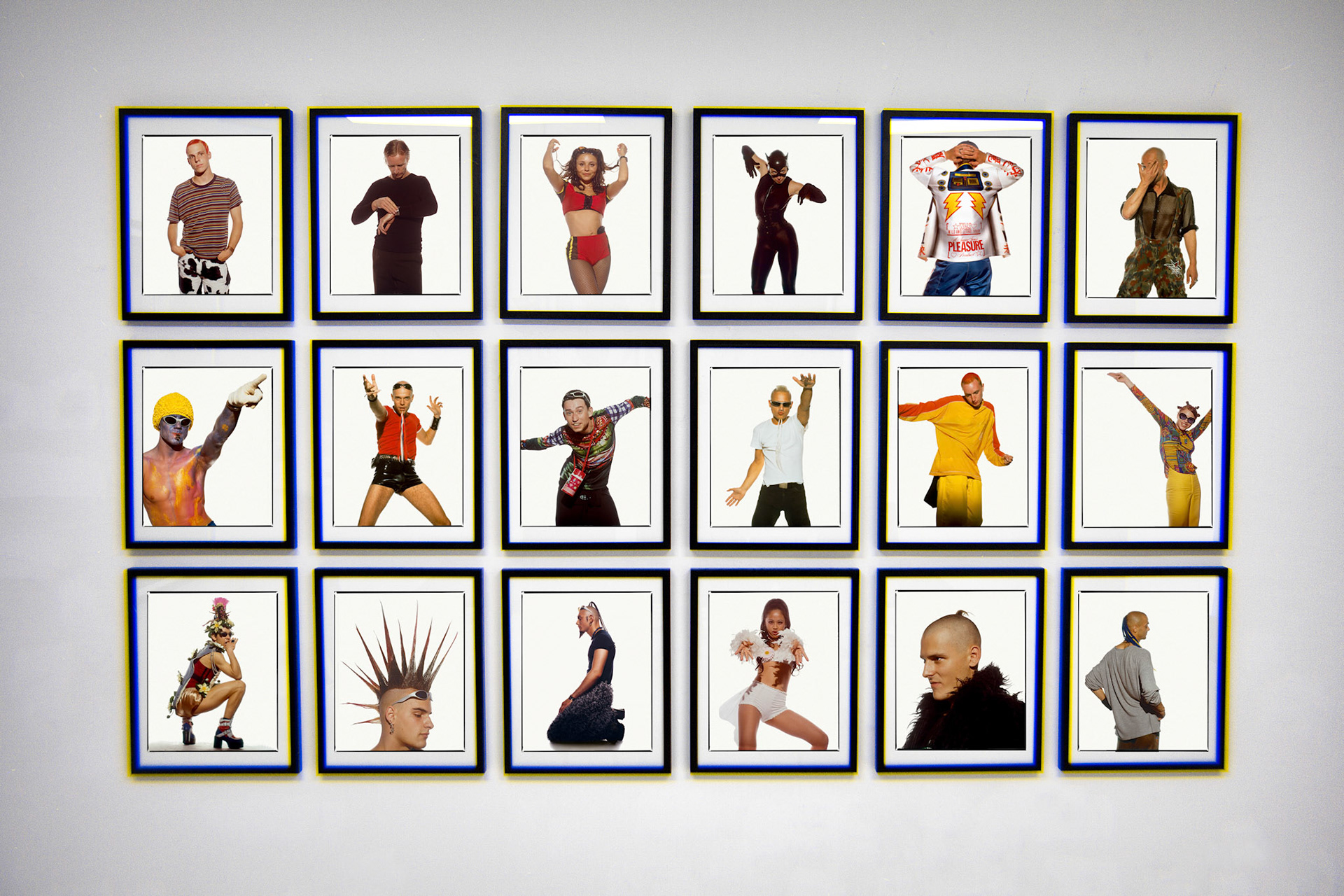
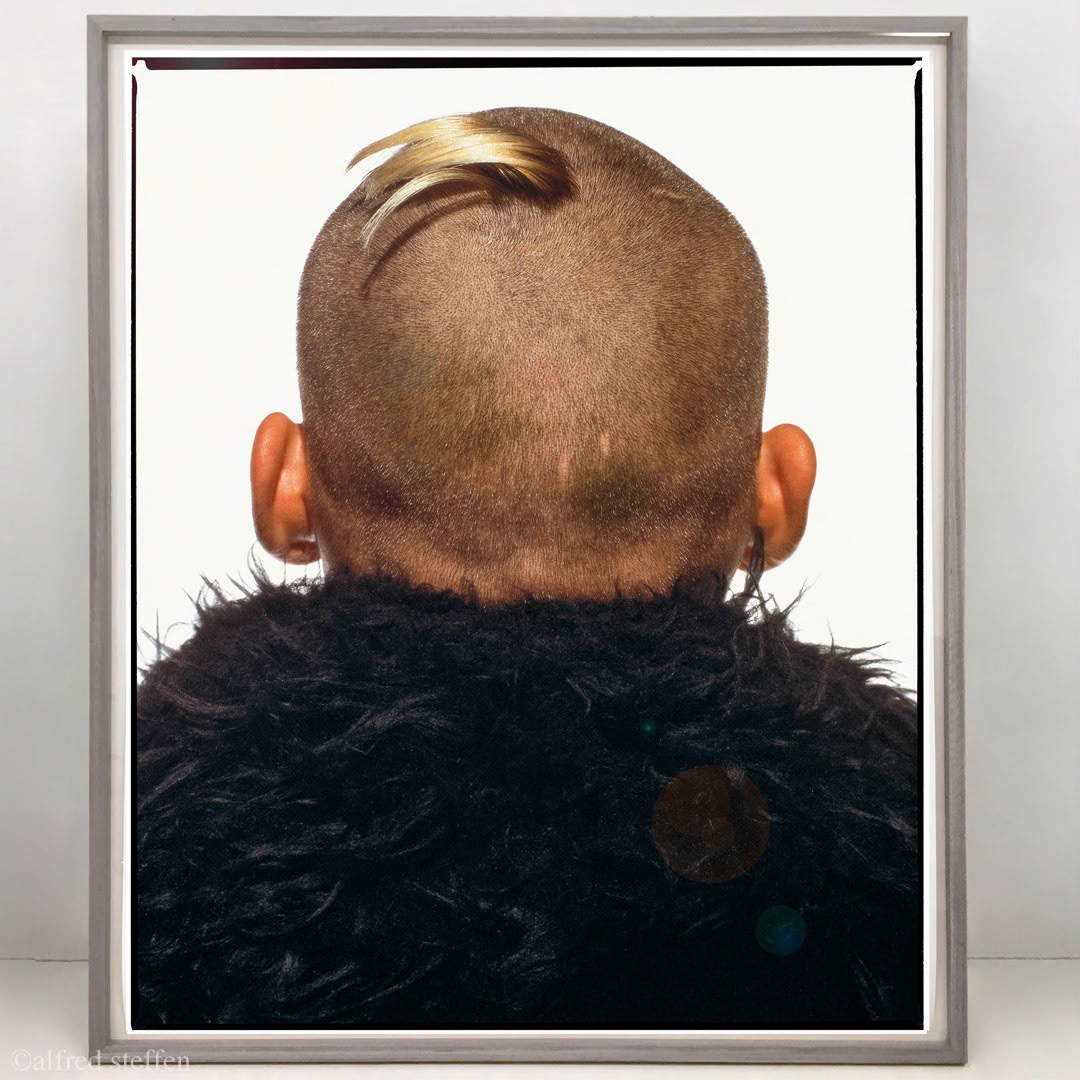
For the project, Alfred Steffen transformed a truck with a hydraulic lift into a mobile photographic studio and positioned it directly at the center of the Love Parade. Against a pure white background – reduced, clear, and deliberately without context – he photographed the participants of the parade.
This visual concept isolated the ravers from the crowd and turned fleeting encounters into concentrated portraits – immediate, raw, and unfiltered.
250 People in 25 Hours
What followed was a photographic marathon:
Within just 25 hours, 250 portraits were created, with ten exposures taken of each participant – a total of 2,500 photographs.
Within just 25 hours, 250 portraits were created, with ten exposures taken of each participant – a total of 2,500 photographs.
Supported by a large team of assistants, journalists, scouts, production staff, and security, Steffen worked in a strict five-minute rhythm – fast, focused, and with remarkable precision.
The result is a unique cross-section of a generation that consciously resisted social categorisation.
Before the Era of Self-Staging
These photographs were made in a time before smartphones, social media, and constant self-documentation.
The people standing before Steffen’s camera were not trained for visibility – they were simply there: sweating, euphoric, exhausted, extravagant, vulnerable, and free.
The people standing before Steffen’s camera were not trained for visibility – they were simply there: sweating, euphoric, exhausted, extravagant, vulnerable, and free.
It is precisely this immediacy that gives the images their enduring power today.
They show not performance, but presence.
They show not performance, but presence.
A Key Work of the 1990s
In 1997, the project was published by TASCHEN under the title
Portrait of a Generation – The Love Parade Family, accompanied by texts by Philipp Oehmke.
Portrait of a Generation – The Love Parade Family, accompanied by texts by Philipp Oehmke.
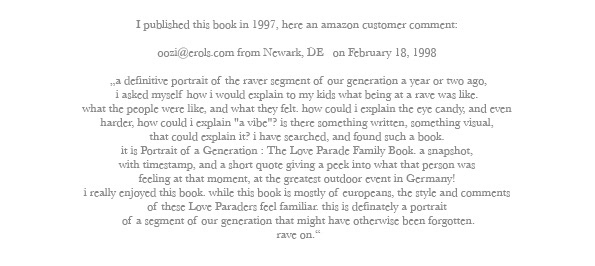
With 142 published photographs, the book is now regarded as one of the most important visual documents of European rave culture – a compelling portrait of a generation shaped by freedom, hedonism, and radical individuality.
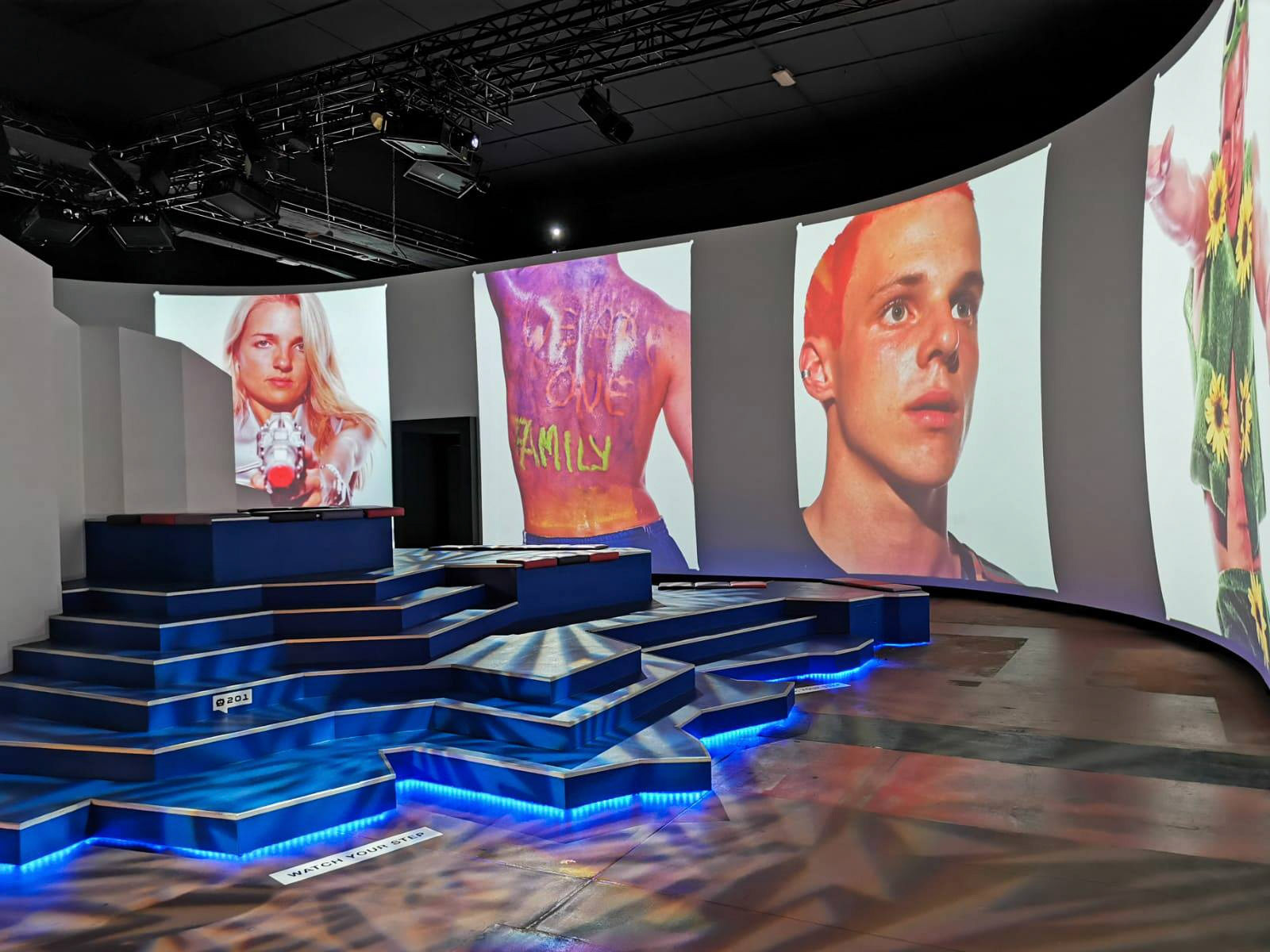
The project’s lasting cultural relevance was reaffirmed in 2024 in the exhibition Dance – The Design of a Culture at the Design Museum Den Bosch, where works from the series were presented once again.